


ELISA with bad result?Follow us to choose the correct Elisa plate.
Choosing a suitable ELISA plate is the first step to a successful ELISA experiment, but many people ignore this. When people do experiments, they often only consider the experiment itself, but do not know that the product often has a great impact on the experiment. Proper selection of products will contribute to the success of the experiment. We usually consider the following factors when conducting ELISA experiments:

1.The shape of the bottom
At present, the manufacturers design the enzyme-labeled wells as independent columns, and appropriately increase the distance between the wells so that they can be separated independently, thereby minimizing cross-contamination. Different types of Elisa plates have different shapes of the well bottom. Here are some common hole bottom shapes:
Flat bottom: The bottom is horizontal, also called F bottom. The light will not be deflected through the bottom, which can transmit the light to the greatest extent. Use for experiments that require a round bottom for visibility or other reasons.
Round Bottom: Also known as U-bottom, provides the best cleaning results and hybrid performance, suitable for applications that need to test sediments.
C-bottom: It can provide a good cleaning effect between the flat bottom and the round bottom, while combining the advantages of the flat bottom.
Cone Bottom: Also known as V-bottom, it is suitable for precise sampling and storage of micro samples for optimal recovery of small volumes.
2. The color of Elisa plate
There are three colors of the Elisa plate: transparent, black and white.
The majority of ELISA choose transparent plates as experimental materials. White and black Elisa plates are generally used for luminescence detection. The black ELISA plate itself absorbs light, so its signal is weaker than that of the white ELISA plate. Black Elisa plates are generally used to detect stronger light, such as fluorescence detection; on the contrary, white Elisa plates can be used for weaker light detection, and are often used for general chemiluminescence and substrate color development (such as dual luciferase). reporter gene analysis).
3. The material of Elisa plate
Common materials are polyethylene (PE), polypropylene (PP), polystyrene (PS), polyvinyl chloride (PVC) and polycarbonate (PC).
The most widely used materials in ELSIA are polystyrene and polyvinyl chloride. Polyvinyl chloride soft board is thin, can be cut, and the price is low. The disadvantage is that the finish is not as good as the polystyrene board, and the bottom of the hole is not as flat as polystyrene. But the corresponding background value will also increase. Usually, ion grafting treatment is carried out on the surface of the ELISA plate, and active functional groups such as aldehyde groups, amino groups, and epoxy groups are introduced into the polymer surface to improve the performance of the substrate surface.
4. different binding mechanisms
Efficient binding of the coating material to the bottom surface of the plate is a crucial step in ELISA. Therefore, the structural characteristics and chemical properties of the substance to be coated should be carefully analyzed before the experiment to select an appropriate Elisa plate. Generally speaking, there are several ways of binding the coating material to the bottom of the plate: passive adsorption, covalent binding and affinity capture.
Passive Adsorption: The mechanism of passive adsorption is complex, and the binding between the coating material and the bottom of the plate mainly relies on intermolecular forces (van der Waals force) and hydrogen bonds. In most ELISAs, the binding of the coating substance to the bottom of the plate is accomplished by passive adsorption. Generally, the binding between medium and large molecular weight antigens (or antibodies) and the bottom of the plate is accomplished by passive adsorption. The hydrophobic/hydrophilic characteristics of the bottom surface of the plate are often considered when selecting a Elisa plate. The following table lists the scope of application and use of different hydrophilic substrate surfaces:
hydrophilic | Priority binding | The main usage |
- | Molecules containing significant hydrophobic regions, such as: lipids, lipoproteins, large proteins | Antigen ELISA, FlA, LIA |
+ | Biomolecules with hydrophilic/hydrophobic properties such as: medium to large proteins, immunoglobulins, albumin | Double Antibody Sandwich ELISA, Antigen ELISA |
++ | Biomolecules with hydrophilic/hydrophobic properties such as: small to large proteins, immunoglobulins, albumin, LPS, phosphorylated proteins, glycoproteins | Double antibody ELISA, FIA, LIA |
+++ | Glycoproteins, polar lipid molecules, phospholipids, cardiolipids | Antigen ELISA |
Affinity Capture: Affinity capture is based on the specific binding of labeled macromolecules to their corresponding receptors. Tagged macromolecules can be obtained either by chemical coupling or by genetic engineering.
Features of Affinity Capture are:
1.high specificity
2.Can improve the signal-to-noise ratio of measurement results
The more common well bottom surfaces are: streptavidin (streptavidin) coated surface; nickel chelate (Nickel Chelate) coated surface and glutathione (Glutathione, GSH) coated surface.
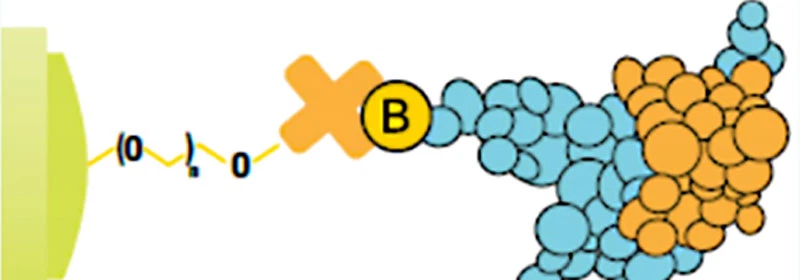
3. Streptavidin surface: The high affinity and specificity of streptavidin and biotin are used to realize the binding of the bottom plate to the coated protein.
4. Nickel chelate surface: Nickel chelate is attached to the polymer surface to bind fusion proteins with His (histidine) tags.
5. Glutathione surface: Use of enzyme and substrate specificity between glutathione and glutathione sulfhydryltransferase (GST) to achieve binding of the bottom plate to the coat protein.
Why choose BKMAM Elisa plate?
Made of 100% polystyrene material,
Suitable for adherent cell culture,
Flat base,even thickness and uniform size for reaction poles,
Sterile with individual package,
High quality with factory price.
