


Introduction and comparison of common sterilization methods

It refers to killing all microorganisms, including pathogenic and non pathogenic microorganisms and spores, by physical or chemical methods to ensure sterility. The uncontaminated articles after sterilization are called sterile articles. The uncontaminated area after sterilization is called aseptic area.
However, for any batch of sterilized products, absolute sterility can neither be guaranteed nor verified by tests. The physical or chemical sterilization test shows that the killing of microorganisms follows the logarithmic rule. Therefore, the sterility standard of sterilized articles is generally expressed by the probability of microbial survival after sterilization - sterility assurance level SAL.
Some common sterilization methods: dry heat sterilization, moist heat sterilization, irradiation sterilization, chemical sterilization, filtration sterilization, etc.
Moist heat sterilization
The moist heat sterilization method uses high temperature and high pressure steam as the medium. Due to the large latent heat and strong penetration of steam, it is easy to denature or solidify proteins and eventually lead to the death of microorganisms. Therefore, the sterilization efficiency of this method is higher than that of the dry heat sterilization method, which is the most commonly used sterilization method in the production of pharmaceutical preparations. The moist heat sterilization condition is usually 121 ℃ × 20min. When the temperature is raised, the time will be reduced accordingly. Generally speaking, the maximum temperature can reach 134 ℃. At this time, the sterilization can take a few minutes.
For the common consumables in biological laboratories, most of the glass can withstand the high temperature of moist heat sterilization, while plastic products need to see different materials. Materials that can be sterilized by moist heat generally include PP, PPCO, PC and fluorinated polymer plastics. The laboratory usually uses some indicator products to determine whether the high-temperature and high-pressure sterilization pot meets the specified sterilization conditions. For example, the indicator tape or indicator card in the following figure and other products are put into the sterilization pot together with the samples to be sterilized. If the sterilization conditions in the pot are qualified, discoloration will occur, most commonly from shallow to deep.
It is worth noting that such products can only prove that the sterilization conditions in the sterilization pot have been met, but can not prove that the sterilized samples have reached the sterile state.

Dry heat sterilization
Dry heat sterilization is a technology to kill bacteria and bacterial spores with high temperature in a dry environment. It is used for articles that cannot withstand hot and humid steam and cannot be sterilized with high-pressure steam, such as chemicals that must be kept dry, sharp instruments such as knives and scissors, and anhydrous oils, ointment, glycerin, etc.
Dry heat sterilization requires higher temperature and longer time. The common temperature is 160 ℃, lasting for 2h. Dry heat is most suitable for sterilization of glassware, especially glass syringes. The temperature can be increased to 170 ℃ and the sterilization time is 1h.
Dry heat is harmful to some heat resistant materials and is not suitable for application. The dry heat sterilization method can hardly be used for plastic products, because even PP materials with good temperature tolerance can only withstand 135 ℃, and almost only fluorinated polymer plastics can withstand the high temperature environment of dry heat sterilization.
Dry heat sterilization | Moist heat sterilization | |
Principle | High temperature | High temperature + Steam penetration |
Thermal penetration | Poor penetrability | Good penetrability |
Temperature | 160-200 | 121-134 |
Pressure | Normal pressure | 15psi |
Time | 1-2h | 15-30min |
Irradiation sterilization
Irradiation sterilization is an effective method to kill microorganisms on most substances by using electromagnetic waves generated by ionizing radiation. Radiation used for sterilization includes electron beam, X-ray and γ Ray, etc. They can control the growth of microorganisms or kill microorganisms in a specific way.
X-ray and γ Radiation can cause other substances to oxidize or produce free radicals (OH · H) and then act on biological molecules, or directly act on biological molecules, break hydrogen bonds, oxidize double bonds, destroy ring structures or polymerize some molecules, etc., to destroy and change the structure of biological macromolecules, thereby inhibiting or killing microorganisms.
Irradiation sterilization is suitable for articles that cannot withstand dry heat or damp heat and high temperature environment. Therefore, many plastic products that cannot withstand high temperature, such as culture dishes, cell culture plates, cell culture bottles, will be sterilized by irradiation.
Chemical sterilization
Chemical sterilization refers to the method of killing microorganisms by directly acting on them with chemicals. Chemicals that can kill microorganisms are called germicides, which can be divided into gas germicides and liquid germicides. Chemical disinfection and sterilization can be used for all articles that are not suitable for physical disinfection and sterilization. Ethylene oxide sterilization method is introduced here.
Ethylene oxide is a gas, and ethylene oxide sterilization is a broad-spectrum, efficient, penetrating sterilization method with slight damage to disinfected articles. Its vapor pressure is relatively high, and it can penetrate micropores to reach the depth of the article. Its liquid and gas have strong bactericidal effect, and the gas has stronger bactericidal effect. Ethylene oxide can kill various microorganisms, including bacterial propagules, spores, fungi, viruses, etc. It is a broad-spectrum disinfectant.
Ethylene oxide sterilization is very common in some medical devices and medical consumables. However, it should be noted that EO is a harmful gas, so it usually needs to be lower than a certain concentration after sterilization to meet the requirements.

Filtration sterilization
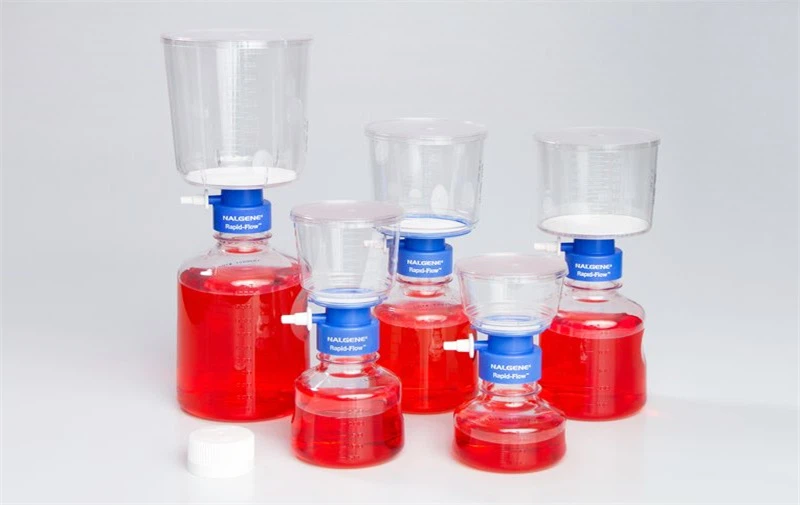
Filtration is not strictly a sterilization method. This method is consistent with the principle of using filter paper to remove solid particle impurities in liquid, except that the pore diameter of the filter membrane used is very small because the bacterial size is much smaller. The pore diameter of the commonly used bacterial removal filter membrane on the market is 0.22 μ m/0.2 μm.
This method is only applicable to liquid and gas sterilization, for example, PES filter membrane is usually used for cell culture and sterilization; During cell culture, a sterilizing air filter is connected to the ventilation hole of the cell device to achieve the goal of air permeability and sterilization.
Pipette tips,Centrifuge tubes,Cryogenic vials,Sampling bags,Stool sample collection containers
All of our products are very affordable as we are a original manufacturer for lab & medical consumables in China.You can also buy pressure steam sterilization indicating tape, syringe filter in BKMAM.
